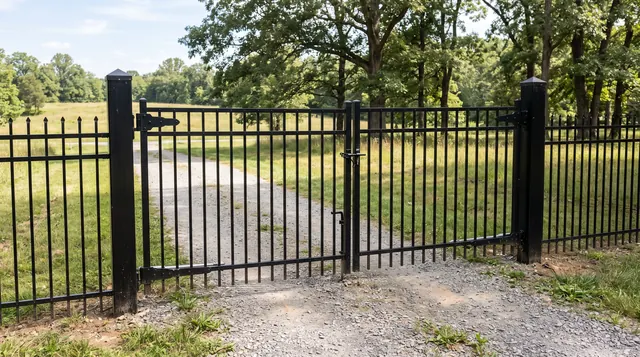
Charlottesville Fence & Gate offers fence and gate installation in Palmyra, VA, managing the work through fully licensed and insured contractors. Tell us what needs to change, then we can plan the route, material and openings around that purpose.
Start with the property, not just the panel
Pleasant Grove and its Rivanna River setting are part of the Palmyra area context. A nearby private fence project still needs its own route and ownership information; park trails and public access do not create a private delivery route.
Palmyra properties outside Lake Monticello should not be assigned Lake Monticello association rules merely because they share a postal area. Identify the actual covenants and Fluvanna requirements for the property before the design is submitted.
When the goal is a useful yard within a larger parcel, compare the enclosed area with the full property perimeter. A manual access gate may be more valuable than extending decorative fencing along an edge the household does not need enclosed.
A layout decision to compare
Consider an equipment-access gate in a new yard enclosure. This is a planning example, not a claim about a completed customer job. The household needs space for the dog and access for a mower, rather than a fence around every acre. Draw that smaller route, specify the gate and identify private services. Compare open and screened sections according to the views and containment needed.
Discuss your Palmyra fence
Get an Estimate for Your Palmyra Property. Include the address, the purpose of the enclosure and the openings you need.
Distinguish an open boundary from an animal enclosure
Split-rail and ranch-rail designs create a visible boundary with substantial open space between rails. That openness may be exactly what you want along a frontage or garden edge. It does not make the same assembly suitable for containing a dog or horse without further design decisions.
Adding mesh is a system choice, not merely an accessory to mention at the end. Mesh opening, attachment and the ground transition need to suit the intended animal and the support arrangement. A decorative residential rail should not be described as horse containment simply because the finished fence looks similar from a distance. Define the job first, then select the rail, mesh and gate details that can do it. The accepted drawing should show where open boundary sections change to enclosed sections.
Give the opening its own specification
A gate is a moving assembly within a mostly stationary fence. Its frame, posts, hinges and latch need to work together at the chosen span. The usable opening is the clear space left for people or equipment after the supports and hardware are accounted for. It can differ from the nominal size used to describe the gate.
Show what must pass through: a mower, wheelbarrow, trailer or everyday pedestrian route. Also show where the leaf can move and where it will rest when open. Slope, planting and parked vehicles can interfere even when the closed gate looks well positioned. A latch should be reachable by the intended user without making the enclosure awkward to secure. Plan these details with the fence so that a convenient opening is not squeezed into the only remaining space.
Establish the route before placing the posts
A fence marks the line where it is built; it does not establish the legal property boundary. Start with the survey or plat and any recorded documents affecting the route. An old fence may have been placed inside the property, moved around a tree or built with a neighbor's informal agreement. A line on a public mapping website is useful for orientation, but it is not a substitute for resolving an uncertain boundary.
Identify the corners before ordering sections. If the route changes after the posts are set, the correction can involve more than moving a few boards. Gates, panel lengths and the appearance of the return all depend on those positions. Tell us about disputed or missing markers early so that the installation layout can wait for the right boundary evidence.
Posts and footings carry the work
Posts support the fence, but they do not all carry the same load. A line post supports the intervening run. A corner, end or gate post may also resist tension, a change of direction or the weight of a moving gate. Simply matching the appearance of the existing posts does not establish that they are suitable for the new system.
Embedment and footing dimensions depend on the selected fence, soil, exposure and loads. A taller solid screen has different demands from an open rail boundary. Ground that looks firm at the surface can behave differently at the proposed footing. The specification should identify the installation method and the relevant product requirements. We work through those decisions with the installation contractor; a single universal hole depth is not an adequate plan for every property or gate.
Choose where the budget makes the biggest difference
Decide which outcome matters most before trimming the scope. Screening a patio, enclosing a dog area and defining a frontage are different priorities. Reducing the route can change the price while preserving the intended result; removing necessary supports or gate hardware changes the system itself.
Compare a basic finish and a more decorative arrangement on the same drawing. Ask what maintenance each will need and whether the product is readily identifiable for future replacement parts. Keep essential access in the plan. A fence that saves money by omitting the only useful equipment gate may create another expense later. The estimate conversation should make these tradeoffs visible so a lower total represents a deliberate choice about the finished work rather than an overlooked part of the project.
Fence systems and access options
Compare wood, vinyl, aluminum and chain link for the yard. Gates belong in the initial layout. Horse fencing, commercial work and temporary construction enclosures have separate planning scopes.
How we handle a Palmyra project
Send the exact Palmyra address and photos from the entrance to the proposed line. We review the intended use, any retained fencing and the approach for installation. Identify the documents and review process for Fluvanna County, along with any private requirements. The written scope brings those decisions together before the work is scheduled.
Questions about fencing in Palmyra
Do Lake Monticello rules apply to every Palmyra address?
Do not assume so. Check the actual association or covenants attached to the property separately from the Fluvanna review.
Can I enclose only the area near the house?
That is a useful option when the whole parcel does not need containment. Include the equipment route and gate so the smaller enclosure remains practical to maintain.
Which parts of the scope should I settle first?
For an equipment-access gate in a new yard enclosure, begin with the purpose, proposed line and the access it needs. Compare the drawing with your boundary documents before choosing the final system.
What does residential fencing cost here?
Use a Charlottesville-area starting range of about $20 to $45 per linear foot for residential installation. Gates, removal and difficult site work add to the total. A commercial, equestrian or temporary-fencing project needs its own scope rather than the residential range.
Can I include a gate and existing-fence removal?
Yes. Mark the opening and the sections to remove on the Palmyra sketch. Specify what needs to pass through the gate, and ask for retained posts or concrete footings to be identified in the estimate.
Nearby service areas
- Fence Installation in Lake Monticello, VA
- Fence Installation in Rivanna, VA
- Fence Installation in Keswick, VA
Plan the next step
- Fence planning guide for the Charlottesville area
- Fence installation cost in the Charlottesville area
- Fence utility locates and easements
Get an Estimate for Your Palmyra Fence. Send the location, approximate route and what you need the finished work to do.