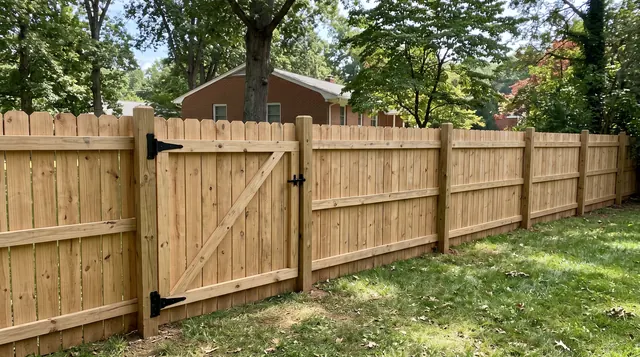
Residential fence installation in the Charlottesville area generally runs about $20 to $45 per linear foot. For a 150-foot fence, plan around $3,000 to $6,750 before gates, old-fence removal and difficult site work. Material, height and the layout of your property drive the final price.
Charlottesville Fence & Gate helps you turn that broad starting point into a project scope. The important question is what the estimate includes. A price for a clear fence run cannot tell you the total for a replacement with old concrete, difficult access and several gates.
What the budgeting ranges include
Start with the length of the fence you actually want to build. Measure the proposed route rather than the perimeter of the whole lot, and mark each gate opening. Use the $20 to $45 per-foot range for an initial residential installation budget, then choose the material, height and style before comparing detailed estimates.
Plan the budget in three parts: the new fence, the gates and any preparation or removal. Materials and installation form the fence-run price. Gates have their own posts and hardware. Removing old fencing, arranging a survey or working through rock can add work that a simple footage calculation misses.
For example, a 100-foot residential fence run gives you a starting budget of $2,000 to $4,500. At 200 feet, that becomes $4,000 to $9,000. Add the gates and any removal to those examples. Show each opening on the sketch so it is priced as a gate rather than counted twice as both fence and gate.
How materials and gates affect the scope
Material affects more than the appearance of the panels. A wood design needs a board arrangement and finish expectations. A vinyl system has particular profiles and installation requirements. An open aluminum fence has a different purpose from a solid privacy barrier. Compare the system you want installed, rather than choosing a generic material label and assuming the details.
Posts, footings and the connections between components are part of the fence system. Gate posts have a different job from an ordinary run of line posts. A wide or heavy gate changes the support and hardware conversation. Its usable opening and movement need to be planned before a price is treated as complete.
For chain link, the framework, fabric and finish need to be specified. A residential yard enclosure and a taller commercial perimeter can require different posts, mesh and gates. The chain-link service page explains what should be in the proposal so you can compare the actual systems being offered.
Site conditions that change the cost
Removing an old wood privacy fence typically adds about $3 to $6 per linear foot for labor and haul-away. For a 100-foot run, allow around $300 to $600. Pulling concrete footings is additional work, so tell us whether the replacement follows the old line and whether the old posts need to come out completely.
Access matters. A clear side yard and a narrow passage through established planting do not provide the same working conditions. Show the route for materials and installation equipment, including the proposed gates. A photograph from the street alone may leave out the part of the job that affects installation most.
Slope changes how sections meet the ground and how a gate can move. Rock and other ground conditions can affect excavation and footing work. The response should be based on what is encountered and the chosen system, with any allowance or separate pricing explained before it becomes an unexpected part of the bill.
Horse fencing, permanent commercial fencing and temporary construction fencing need their own scopes. A long pasture run is not equivalent to a short residential privacy screen. A temporary enclosure introduces duration, delivery and removal questions. Rental availability, minimum terms and extension costs have to be confirmed rather than inferred from a general installation rate.
What to check before the work
Write down the route, footage and height. Identify the material or system, each gate opening and any existing fencing to remove. Attach a sketch if that makes the line easier to understand. Keep unresolved boundary or approval questions visible rather than treating them as settled on an early drawing.
Compare quotes against that same description. Check the gates, disposal and finish. If one proposal includes an item that another leaves open, resolve the difference before comparing the totals. A clear exclusion is useful information; a missing description makes the comparison harder.
Use the fence cost estimator to try a few lengths before requesting an estimate. It shows the fence-run budget separately from the project details still to settle. When you are ready, send the address, approximate footage and photos so we can work through the actual property.
Questions and next steps
How much should I allow for a 150-foot fence
A starting budget is about $3,000 to $6,750 for a residential fence run. Add gates, removal and any unusual site work. We narrow that down once the route, material and height are settled.
Does a gate use the same per-foot price
No. A gate needs an opening, leaves, posts and hardware appropriate to its use. Ask for the gate scope separately, including any automation or electrical work if that is being considered.
Can I budget a temporary fence from these ranges
Use a temporary-fencing scope instead. The panel system, length, duration, delivery, setup and retrieval can all be relevant. Confirm whether the proposal is for rental, purchase, installation or a combination of those services.
Related service: Fence installation. Related guides: Gate installation cost; Wood versus vinyl; Fencing on a slope; Property lines and surveys.
Get an Estimate. Send your approximate footage and gate requirements so we can work through the actual scope.