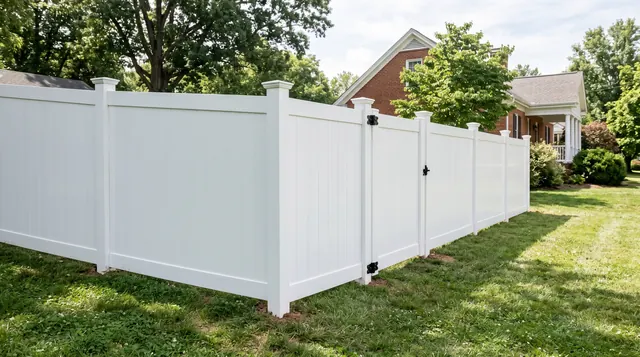
Vinyl and composite are product families with different compositions and assembly requirements. Compare the exact panel, reinforcement, permitted span and care instructions. A promise of low maintenance does not mean the two systems have identical weight, support or damage-repair requirements.
Charlottesville Fence & Gate helps property owners plan fence and gate work across the Charlottesville area, with installation managed through fully licensed and insured contractors.
The decision to work through
Composite products can use combinations of wood fibers, polymers or other constituents, depending on the manufacturer. Do not infer the composition from the name or color. Obtain the actual technical information and check how rails, boards and posts work together. Composite is discussed here as a material comparison; availability and installation scope must be confirmed before it is specified.
Treat vinyl as a complete panel system
Vinyl fencing is assembled from components designed to work together: posts, rails, infill and any specified reinforcement. A vinyl sleeve does not tell you what support is inside it. Gate posts in particular may need a different arrangement from the posts along a straight run. The accepted product specification should make that distinction clear.
Thermal movement, rail engagement and fastening details follow the manufacturer's system. Mixing parts because they look similar can leave an uncertain connection. On a slope, confirm whether the chosen product racks, steps or requires another treatment. Also ask what happens if a panel is damaged later: a matching replacement section may depend on the profile and product line. Keep the product identification with the project paperwork so a future repair conversation can begin with the actual system.
Posts and footings carry the work
Posts support the fence, but they do not all carry the same load. A line post supports the intervening run. A corner, end or gate post may also resist tension, a change of direction or the weight of a moving gate. Simply matching the appearance of the existing posts does not establish that they are suitable for the new system.
Embedment and footing dimensions depend on the selected fence, soil, exposure and loads. A taller solid screen has different demands from an open rail boundary. Ground that looks firm at the surface can behave differently at the proposed footing. The specification should identify the installation method and the relevant product requirements. We work through those decisions with the installation contractor; a single universal hole depth is not an adequate plan for every property or gate.
Bring the plan into focus
Get an Estimate. Send the address, photos and the question you are trying to resolve.
Control the board span and the finished lines
Horizontal boards put the length of each board on display. Their span, support and attachment influence how the face looks after installation and as the wood changes with exposure. A narrow modern pattern does not remove those structural questions. The selected material and design determine where support is needed.
On a sloping site, decide whether the top line follows the ground, steps between sections or remains level above a changing lower gap. Each produces a different visual rhythm. Corners, returns and gate frames also interrupt the horizontal lines, so work through them on the drawing rather than expecting every board to continue without a break. If the design uses gaps, check what can be seen through them and whether the spacing fits any containment goal. Appearance and enclosure need to be evaluated together.
Give the opening its own specification
A gate is a moving assembly within a mostly stationary fence. Its frame, posts, hinges and latch need to work together at the chosen span. The usable opening is the clear space left for people or equipment after the supports and hardware are accounted for. It can differ from the nominal size used to describe the gate.
Show what must pass through: a mower, wheelbarrow, trailer or everyday pedestrian route. Also show where the leaf can move and where it will rest when open. Slope, planting and parked vehicles can interfere even when the closed gate looks well positioned. A latch should be reachable by the intended user without making the enclosure awkward to secure. Plan these details with the fence so that a convenient opening is not squeezed into the only remaining space.
Keep a useful record of the finished scope
Keep the accepted route drawing, product identification and description of retained components together. If maintenance instructions are supplied for a finish or gate system, store them with that record. A future damaged-panel inquiry is easier to assess when the material and profile can be identified.
Photograph the completed line and gate arrangement for your own records. Do not use a photograph as a substitute for a survey or approval document; it records appearance, not the legal boundary. Note which old footings were removed and which were left in place if that was part of the scope. When later landscaping or building work is planned, that information can help explain what is already underground and what should be reviewed before the fence is altered.
Questions before you decide
What information is most useful at the start?
The address, proposed route, intended purpose and photos help define the question. Add the product information or existing-fence details when you have them.
Can a photograph settle the whole scope?
Photos help with the first discussion, but they do not establish hidden conditions, boundaries or approval. Keep those questions separate from the appearance of the fence.
What is the next step?
Choose the outcome you need, identify the unresolved decisions and request an estimate with that information. The written scope should describe the system and work before installation.
Related service and guides
- Vinyl Fence Installation in Charlottesville, VA
- Fence planning guide for the Charlottesville area
- Fence installation cost in the Charlottesville area
- Survey before fence installation
- What happens during fence installation
Get an Estimate. Tell us where the property is and what needs to change.