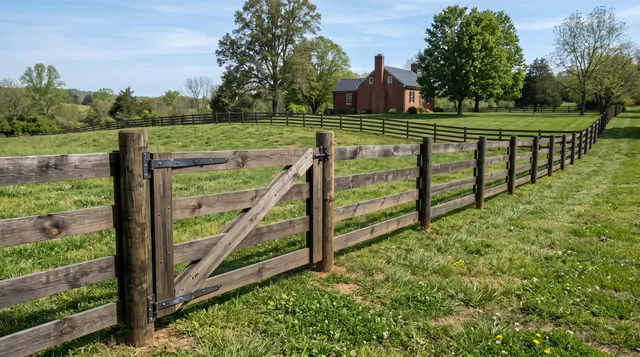
Choose a system intended for the horses and their use, with attention to visibility, openings, supports and maintenance. Board, horse-rated woven mesh and horse-rated polymer rail are different options. A decorative residential fence is not made suitable for equine containment by a similar appearance.
Charlottesville Fence & Gate helps property owners plan fence and gate work across the Charlottesville area, with installation managed through fully licensed and insured contractors.
The decision to work through
Ask about foals, small equines and known rubbing or leaning behavior before selecting the enclosure. No-climb is a product description that still needs evaluation of the actual mesh openings and attachment. Smooth coated wire or electric offsets require their own specialist review and should not be assumed to be included with a rail or mesh installation.
Plan pasture and paddock fencing around the horses
Horse pasture fencing and a smaller turnout paddock serve related but different patterns of use. Identify the horses, their size and behavior, the time spent in the enclosure and the routes between housing, water and turnout. A fence that defines a field visually is not automatically an appropriate containment system.
Board horse fencing, horse-rated woven mesh and horse-rated polymer rails require product-specific selection. Mesh opening suitability, visibility, attachment and the condition of the whole perimeter matter. Avoid exposed sharp edges and protruding fasteners, and isolate a damaged area from use until it has been addressed. No material makes an enclosure injury-proof. The aim is a coherent layout and system that suits the animals and can be inspected and maintained, with advice from the relevant equine and product specialists where needed.
Brace ends and corners for the selected system
Tensioned mesh transfers force to ends, corners and gate supports. Those locations need the bracing arrangement specified for the actual system and ground. Pulling fabric tighter will not correct an inadequate end assembly. Loss of tension can change the shape of the fence and create openings that were not present when it was first installed.
Horses may also rub or lean on the boundary, adding a different load from the fabric tension. Review rails, fasteners and post attachments as parts of the same enclosure. At gateways, account for the change between the fixed fence and moving leaf, including the ground gap. A pasture gate used by a tractor has different clearance and approach needs from a pedestrian opening. Plan both without leaving a casual gap that undermines the surrounding containment.
Bring the plan into focus
Get an Estimate. Send the address, photos and the question you are trying to resolve.
Distinguish an open boundary from an animal enclosure
Split-rail and ranch-rail designs create a visible boundary with substantial open space between rails. That openness may be exactly what you want along a frontage or garden edge. It does not make the same assembly suitable for containing a dog or horse without further design decisions.
Adding mesh is a system choice, not merely an accessory to mention at the end. Mesh opening, attachment and the ground transition need to suit the intended animal and the support arrangement. A decorative residential rail should not be described as horse containment simply because the finished fence looks similar from a distance. Define the job first, then select the rail, mesh and gate details that can do it. The accepted drawing should show where open boundary sections change to enclosed sections.
Give the opening its own specification
A gate is a moving assembly within a mostly stationary fence. Its frame, posts, hinges and latch need to work together at the chosen span. The usable opening is the clear space left for people or equipment after the supports and hardware are accounted for. It can differ from the nominal size used to describe the gate.
Show what must pass through: a mower, wheelbarrow, trailer or everyday pedestrian route. Also show where the leaf can move and where it will rest when open. Slope, planting and parked vehicles can interfere even when the closed gate looks well positioned. A latch should be reachable by the intended user without making the enclosure awkward to secure. Plan these details with the fence so that a convenient opening is not squeezed into the only remaining space.
Keep a useful record of the finished scope
Keep the accepted route drawing, product identification and description of retained components together. If maintenance instructions are supplied for a finish or gate system, store them with that record. A future damaged-panel inquiry is easier to assess when the material and profile can be identified.
Photograph the completed line and gate arrangement for your own records. Do not use a photograph as a substitute for a survey or approval document; it records appearance, not the legal boundary. Note which old footings were removed and which were left in place if that was part of the scope. When later landscaping or building work is planned, that information can help explain what is already underground and what should be reviewed before the fence is altered.
Openings, visibility and condition checks
Unsuitable mesh openings can create potential hoof or limb entrapment. Poor fence visibility can increase collision concern, especially when a horse is moving quickly or startled. Foal and small-equine requirements therefore need an explicit product and layout review rather than an adult-horse assumption. Fence inspection and damaged-section isolation are ongoing responsibilities: keep animals out of an affected area until the defect has been addressed. No-climb wording does not replace review of the actual mesh and installation.
Questions before you decide
What information is most useful at the start?
The address, proposed route, intended purpose and photos help define the question. Add the product information or existing-fence details when you have them.
Can a photograph settle the whole scope?
Photos help with the first discussion, but they do not establish hidden conditions, boundaries or approval. Keep those questions separate from the appearance of the fence.
What is the next step?
Choose the outcome you need, identify the unresolved decisions and request an estimate with that information. The written scope should describe the system and work before installation.
Related service and guides
- Horse Fence Installation in Charlottesville, VA
- Fence planning guide for the Charlottesville area
- Fence installation cost in the Charlottesville area
- Survey before fence installation
- What happens during fence installation
Get an Estimate. Tell us where the property is and what needs to change.