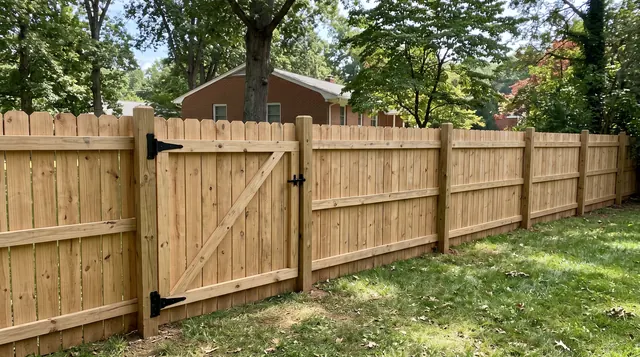
Make the work route usable and keep people and pets separated from unfinished fencing. Preparation starts with the accepted layout and known services, not with clearing everything near the boundary.
Charlottesville Fence & Gate helps Charlottesville-area property owners plan installation and replacement, with the work managed through fully licensed and insured contractors.
Start here
Move portable items from the agreed route and identify planting that stays. Keep boundary markers and utility markings intact. Confirm where deliveries can enter and materials can be staged. If someone else controls a drive or side passage, arrange permission before installation relies on it.
Keep the household out of the work area
Before installation, decide how people and animals will use the property while materials and open holes are present. Move portable items from the agreed work route and identify fragile planting or equipment that needs protection. Do not move utility markings or boundary markers while clearing the yard.
If the old fence contains a pet, plan a separate arrangement before removal starts. A partially completed run does not provide the same enclosure as the finished system. Tell us about shared entrances and any access another person controls. Work limits should be clear to everyone using the property, including where materials can be left between visits. These preparations reduce avoidable interruptions and help the installation stay within the agreed route without treating the entire yard as an unrestricted staging area.
Plan the route for materials and equipment
The installation route is not always the same as the delivery route. A driveway may accommodate a vehicle while a narrow side passage limits what can reach the fence line. Steps, overhead branches, soft ground and an existing gate can change the handling or excavation method.
Send photos showing the approach from the street as well as the proposed fence. Tell us what must be protected, where materials can be staged and whether another owner controls any part of the access. Permission to enter a neighboring yard or shared drive should be settled before the work is scheduled. Do not assume a public path or open space is available for delivery. With access understood, the scope can describe the method and any necessary protection rather than build an estimate around equipment that cannot reach the work.
Locate buried services before excavation
Post holes are small excavations, but a narrow hole can still conflict with a buried service. Arrange the required utility-locate process before digging and preserve the markings while the route is reviewed. A utility marking identifies a service concern; it does not verify the property boundary or authorize a change to the fence line.
Privately owned lines need attention too. Irrigation, lighting, a service to an outbuilding or other owner-installed equipment may need a separate locating arrangement. Tell us what you know about the yard and show any available records. If a proposed post conflicts with a service, the answer may involve changing the layout or the installation method. That decision belongs before excavation, with the affected service and property requirements understood, rather than after a hole has been started.
Put the details in one place
Keep your sketch, photos and accepted scope together. That gives the estimate or follow-up conversation a clear starting point without asking a single photograph to establish everything about the property.
Get an Estimate. Send the location and what you want to change.